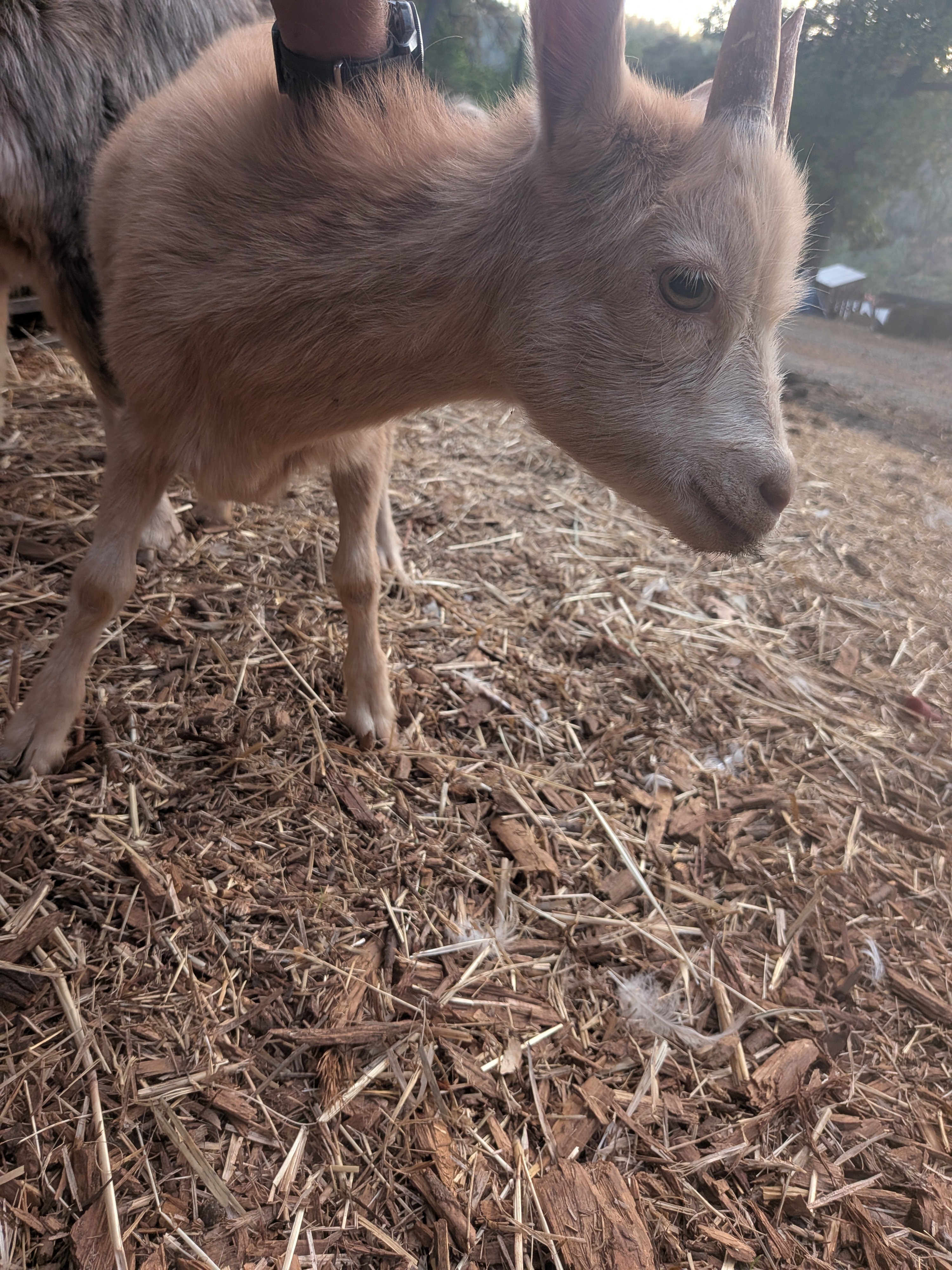
The weather is turning to fall on the Georgetown Divide, bringing the cool air and damp conditions typical of the season. While the change in weather is a welcome break from summer heat, it is also a prime time for parasites, yeasts, and unwanted bacteria to bloom. A random sprinkling of autumn rain paired with residual warmth creates an ideal breeding ground for unwanted pests.
As the seasons change, both goat coats and Livestock Guardian Dog (LGD) coats thicken, providing a dense, warm environment where lice can thrive unnoticed.
Recently, I noticed a weak goat calling out to me while I was checking on the babies. I brought him in to nurse him and discovered a heavy blue sucking lice infestation hidden under his thickening coat. Sucking lice drain a goat’s vitality by feeding on blood, leading to severe anemia and weakness. Combined with the sudden cold shift, the toll was too great, and he didn't survive.
An outbreak like this requires immediate, decisive action across the entire farm footprint:
Immediate Topical Spray Treatment: I mixed a comprehensive spray incorporating Permethrin, CyLence, and an Insect Growth Regulator (IGR).
Comprehensive Application: I sprayed all baby goats, adult goats, LGDs, bedding, and pen perimeters to ensure total coverage.
Rapid Assessment: Within 24 hours, inspection confirmed that the active lice infestation was dead.
Systemic Dewormer: I administered Ivermectin to all goats across the herd to support full recovery and internal parasite control.
Record Keeping & Reapplication: The outbreak was logged into my livestock management system, with an automated alert scheduled 14 days out for a mandatory reapplication to break the parasite lifecycle.
When autumn shifts arrive, inspect your herd closely under their thickening winter coats. Early detection and immediate herd-wide treatment are essential to protecting your livestock from seasonal parasite blooms.
Main Call to Action: Have you checked your herd's coats this fall? Share your parasite management protocol in the comments below, or subscribe to our newsletter for more seasonal livestock care guides.